
Denis Fedosov
Expert in technical supervision and real estate acceptance
Do you live in the EU, the UK, or the US, and are you renovating a property in Cyprus? Learn from a practicing consulting engineer how to protect your investment and get a high-quality result.
Practical examples: What to check during the handover of a residential property
The handover of a property is the final stage of a transaction, where the buyer confirms that the asset is ready for use. In the Cypriot market, where aesthetics often take priority over technical quality, a superficial inspection cannot reveal critical risks. An expert audit should cover not only visible finishing elements but also hidden structural characteristics and engineering systems.
Walls, Floors, Windows, and Doors
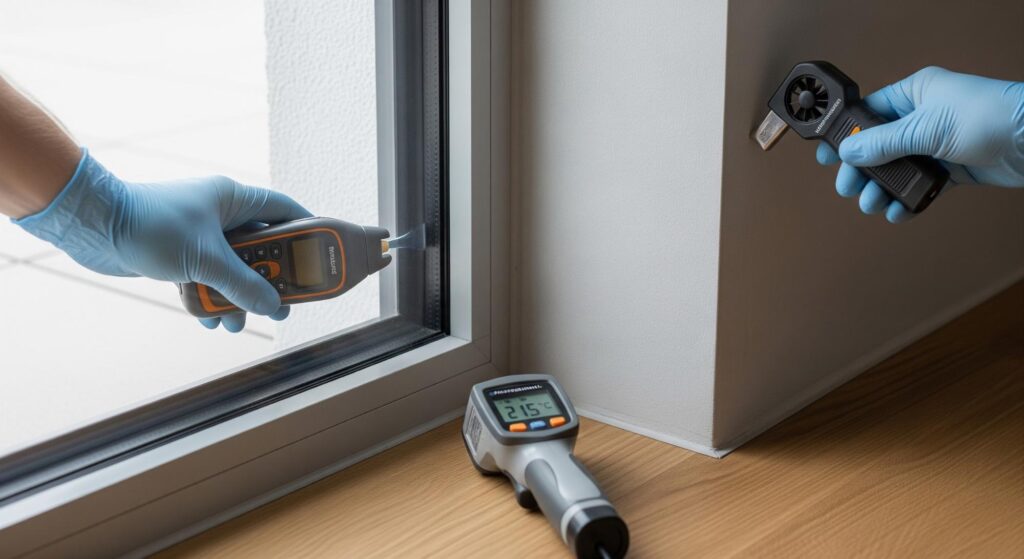
Inspecting a property involves more than checking wall evenness; it requires a thorough audit of the building envelope, which determines future heating and cooling costs. In Cyprus, residential properties often suffer from insulation defects hidden behind expensive finishes. Without instrumental checks, it is impossible to know whether insulation is properly installed or if it has mechanical damage.
During structural inspections, the following deviations are commonly identified:
- Hot air infiltration through unsealed joints of aluminum profiles and door frames.
- “Thermal bridges” at the junctions of floor slabs and external walls.
- Defective installation of window units with thermal breaks, which negates their insulating properties.
Detecting these issues at the handover stage allows buyers to document defects before they cause finish damage from condensation.
Electrical and Plumbing Systems
Modern villas have increasingly complex engineering systems, raising the likelihood of human error during installation. Electrical systems that appear visually correct can hide overheated contacts, potentially leading to accidents. Non-destructive testing methods allow specialists to “look inside” walls without dismantling them.
During a technical audit of utilities, critical risks recorded include:
- Oxidized contacts in circuit breakers, visible as pronounced “hot spots.”
- Uneven heating or air pockets in underfloor heating circuits.
- Microcracks in embedded air-conditioning pipes, appearing as sharp cooling zones in thermographic scans.
Every anomaly is documented in a report, which serves as a legal basis for claims against the construction company.
Hidden Defects and Finishing Flaws
Construction defects are particularly insidious because they often appear over time. For example, a minor leak in the air-conditioning system may damage wallpaper or decorative panels months later. Similarly, the absence of a perimeter damping tape under floors can eventually cause cracks in expensive porcelain tiles due to thermal expansion.
High-sensitivity equipment can detect temperature differences down to hundredths of a degree. This is the only way to ensure that no moisture accumulation or voids exist under the visible surface. Timely auditing helps the owner prevent a chain reaction of damage and preserve the property’s market value.
How Hinode Provides a Comprehensive Inspection
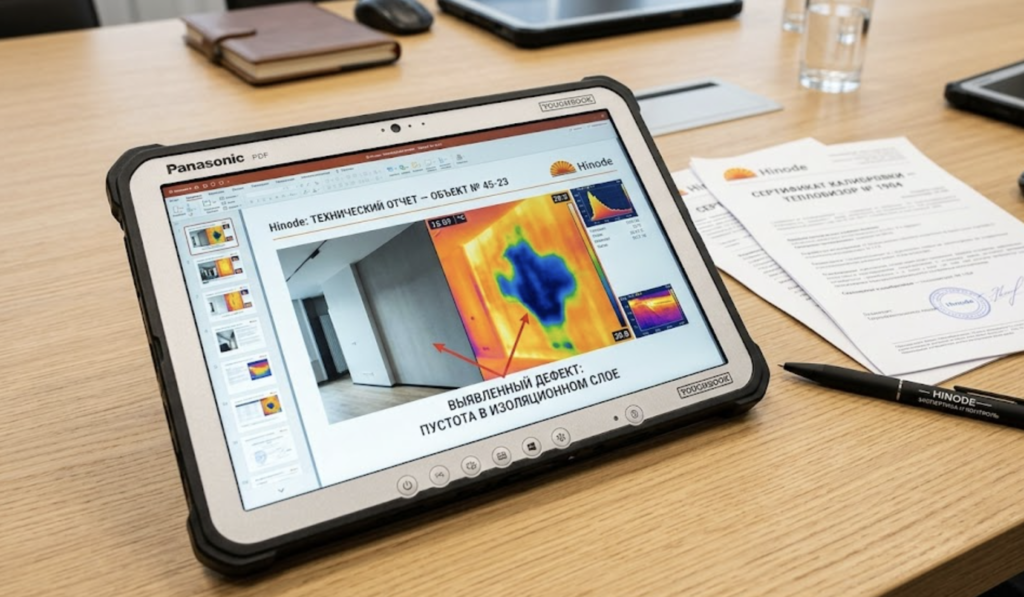
Hinode applies strict calibration algorithms tailored to the shooting conditions, taking into account humidity and distance from the object. This eliminates errors caused by reflections on glossy surfaces or the natural thermal inertia of materials. Every detected defect is checked against project specifications.
The result is an official document where thermograms are overlaid on real photos for maximum clarity. Hinode specialists prepare a solid basis for negotiations with the developer. Having a professional report significantly increases the chances of getting all detected defects corrected at the developer’s expense.
Hinode checks all key elements of residential property to ensure a safe purchase.
featured
-
1What differentiates the handover of residential and commercial properties
The property handover process in Cyprus requires an understanding of how the property will be used. In residential apartments, the priority is occupant comfort and health, while in commercial buildings, economic efficiency and system reliability come first. Any deviations in the building’s thermal profile, if unnoticed, can lead to significant future expenses for the owner. […]
-
2How to know during inspection whether mold will appear
The visual cleanliness of walls during a property inspection can be misleading, especially if a cosmetic renovation was done before the sale. Mold is not just an aesthetic issue—it results from serious engineering mistakes that can remain hidden under paint for years. For investors in Cyprus, it is critical to detect biological threats at the […]
-
3Practical examples: What to check during the handover of a residential property
The handover of a property is the final stage of a transaction, where the buyer confirms that the asset is ready for use. In the Cypriot market, where aesthetics often take priority over technical quality, a superficial inspection cannot reveal critical risks. An expert audit should cover not only visible finishing elements but also hidden […]
-
4Practical Examples: What to Check When Accepting Commercial Property
Purchasing commercial real estate is an investment whose profitability directly depends on future operating costs. Unlike residential properties, office buildings and shopping centers in Cyprus are subject to intense эксплуатационные нагрузки. Any flaws in the building’s thermal performance force HVAC systems to operate under strain, increasing electricity costs and accelerating wear on expensive equipment. Key […]
-
5Why Thermal Imaging Is Essential During Property Handover
Accepting a property requires evaluating not only visible finishes but also hidden structural characteristics. Issues with insulation, installation errors in engineering systems, and energy leaks are often impossible to detect without specialized equipment. Thermal imaging diagnostics make it possible to identify such defects at an early stage and prevent future operational problems. What a Thermal […]