

Denis Fedosov
Expert in technical supervision and real estate acceptance
Do you live in the EU, the UK, or the US, and are you renovating a property in Cyprus? Learn from a practicing consulting engineer how to protect your investment and get a high-quality result.
How to know during inspection whether mold will appear
The visual cleanliness of walls during a property inspection can be misleading, especially if a cosmetic renovation was done before the sale. Mold is not just an aesthetic issue—it results from serious engineering mistakes that can remain hidden under paint for years. For investors in Cyprus, it is critical to detect biological threats at the handover stage, when the developer is still responsible for fixing defects.
Main Causes of Mold Formation
Microbial activity is always secondary; the primary cause is excessive moisture in structures due to disrupted thermal performance of the building. A key risk factor is so-called “thermal bridges”—areas of walls or floors with high thermal conductivity. In these zones, surface temperatures drop below critical levels, creating ideal conditions for mold growth.
Technological errors that promote mold growth include:
- Displacement of the dew point into the interior due to incorrect installation or damage to insulation materials.
- Infiltration of humid air through unsealed joints in window frames and door openings.
- Lack of a continuous insulation layer on the roof, leading to localized ceiling cooling.
Any area with reduced thermal resistance inevitably becomes a moisture hotspot, even if the room appears dry at the time of inspection.
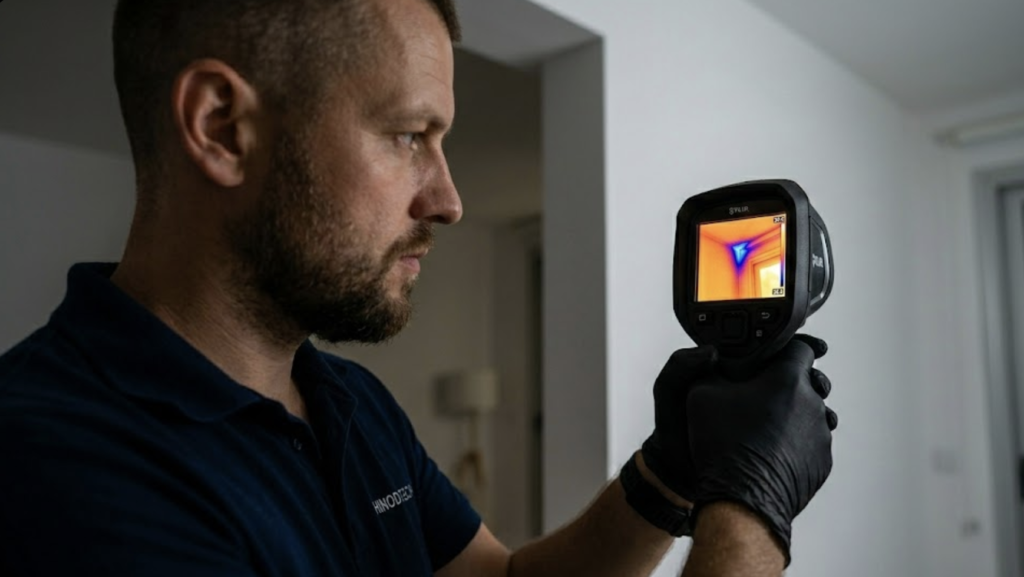
Humidity, Ventilation, and Indoor Climate: What to Watch
Indoor microclimate depends on proper ventilation and the ability of building envelopes to retain heat. In Cyprus, where humidity often exceeds 70%, even minor air stagnation combined with cold surfaces can cause condensation. During audits, particular attention is given to exhaust duct performance and the presence of intake valves, which ensure constant air circulation.
Malfunctions in air-conditioning systems also contribute to biological contamination. Microcracks in refrigerant lines hidden in walls create localized cooling zones. Persistent moisture inside the structure from such leaks promotes mold growth, which may only appear on finishes several months later.
Practical Examples of Vulnerable Areas
Corners of rooms adjacent to the outside and junctions of floor slabs with external walls are particularly prone to mold. Professional equipment with a matrix sensitivity of NETD under 40–50 mK allows detection of these anomalies down to hundredths of a degree. These data form the basis of the defect report and allow buyers to demand corrections before completing the transaction.
Typical risk areas requiring instrumental inspection include:
- Lower parts of walls in underfloor heating rooms, where damping tape installation may be compromised.
- Spaces behind decorative panels and built-in furniture, where natural air convection is disrupted.
- Areas around aluminum profiles installed without proper thermal break technology.
Detecting temperature contrasts in these points is a direct signal of inevitable future mold growth.
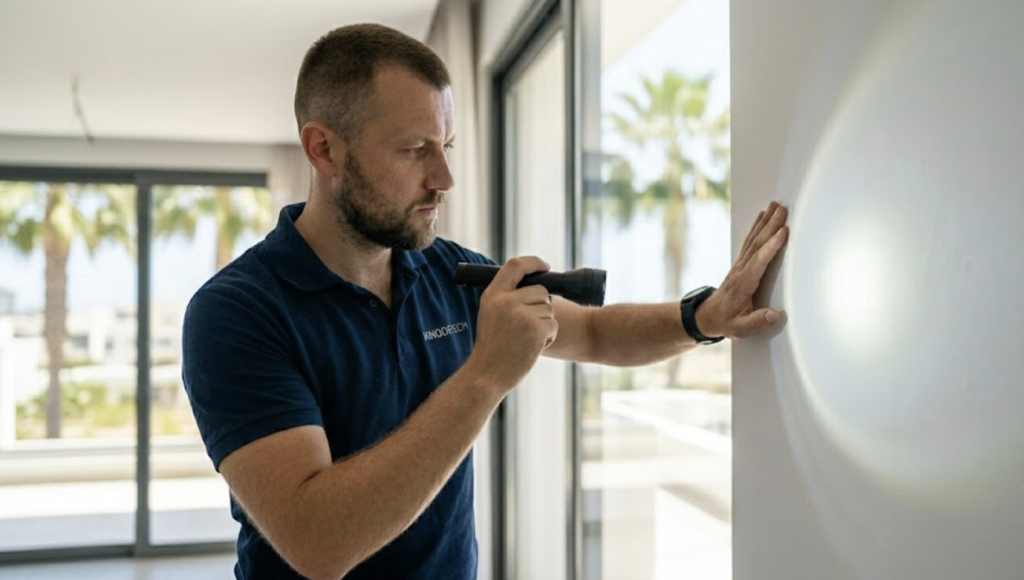
Prevention and Recommendations from Hinode
Preventing biological contamination is always cheaper than subsequent disinfection and repairs. Hinode specialists use chamber-based data analysis to distinguish the natural thermal inertia of materials from actual construction defects. This ensures accurate conclusions and eliminates false positives during inspections.
Having an official technical report with photo documentation of anomalies makes the buyer’s position in negotiations with the developer indisputable. Hinode helps document risks at a stage when the developer is required to restore façade tightness or enhance insulation at their expense. Only this thorough approach guarantees investment safety and a healthy living environment in your new home.
Hinode experts identify potential mold problems and help prevent damage for property owners.
featured
-
1What differentiates the handover of residential and commercial properties
The property handover process in Cyprus requires an understanding of how the property will be used. In residential apartments, the priority is occupant comfort and health, while in commercial buildings, economic efficiency and system reliability come first. Any deviations in the building’s thermal profile, if unnoticed, can lead to significant future expenses for the owner. […]
-
2How to know during inspection whether mold will appear
The visual cleanliness of walls during a property inspection can be misleading, especially if a cosmetic renovation was done before the sale. Mold is not just an aesthetic issue—it results from serious engineering mistakes that can remain hidden under paint for years. For investors in Cyprus, it is critical to detect biological threats at the […]
-
3Practical examples: What to check during the handover of a residential property
The handover of a property is the final stage of a transaction, where the buyer confirms that the asset is ready for use. In the Cypriot market, where aesthetics often take priority over technical quality, a superficial inspection cannot reveal critical risks. An expert audit should cover not only visible finishing elements but also hidden […]
-
4Practical Examples: What to Check When Accepting Commercial Property
Purchasing commercial real estate is an investment whose profitability directly depends on future operating costs. Unlike residential properties, office buildings and shopping centers in Cyprus are subject to intense эксплуатационные нагрузки. Any flaws in the building’s thermal performance force HVAC systems to operate under strain, increasing electricity costs and accelerating wear on expensive equipment. Key […]
-
5Why Thermal Imaging Is Essential During Property Handover
Accepting a property requires evaluating not only visible finishes but also hidden structural characteristics. Issues with insulation, installation errors in engineering systems, and energy leaks are often impossible to detect without specialized equipment. Thermal imaging diagnostics make it possible to identify such defects at an early stage and prevent future operational problems. What a Thermal […]